
By Rehana Thowfeek
This article is written by Rehana Thowfeek. The writer is the Director of Civic Education at Arutha.
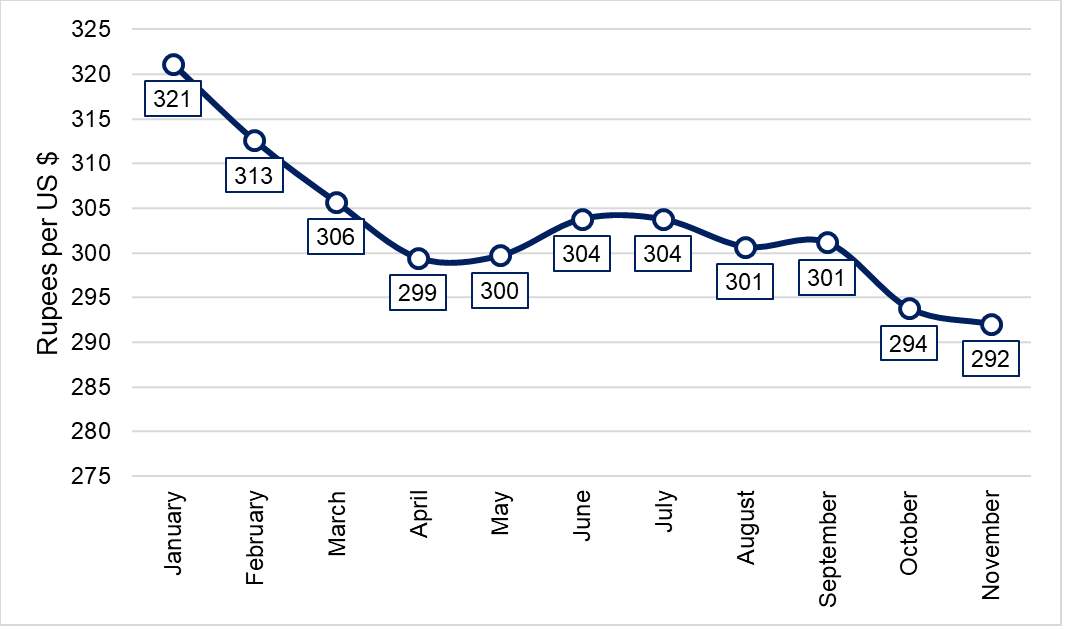
There has been a lot of talk about the appreciation of the Sri Lankan Rupee against the US Dollar in the past few weeks and months. At the start of the year, the exchange rate stood at Rs 321 per US $, and at present it is Rs 293 per US $ – this is an appreciation of the Sri Lankan Rupee by around 8.7% (Figure 1). This is a short explainer on the reasons why the exchange rate is moving in favour of the Sri Lankan Rupee.
Figure 1: Monthly average exchange rate, 2024
Import demand has fallen
Import demand has fallen in comparison to pre-default years (except in 2020 during the Covid-19 pandemic). As Sri Lanka has undergone a severe currency devaluation due to excessive money printing which resulted in rapid inflation, Sri Lankans are a lot poorer than they were before. The same Rs 1,000 does not buy the amount of goods and services now that you could buy before. In addition to this, global inflation was also high due to a combination of pandemic related supply shocks and other factors like the Russia-Ukraine conflict.
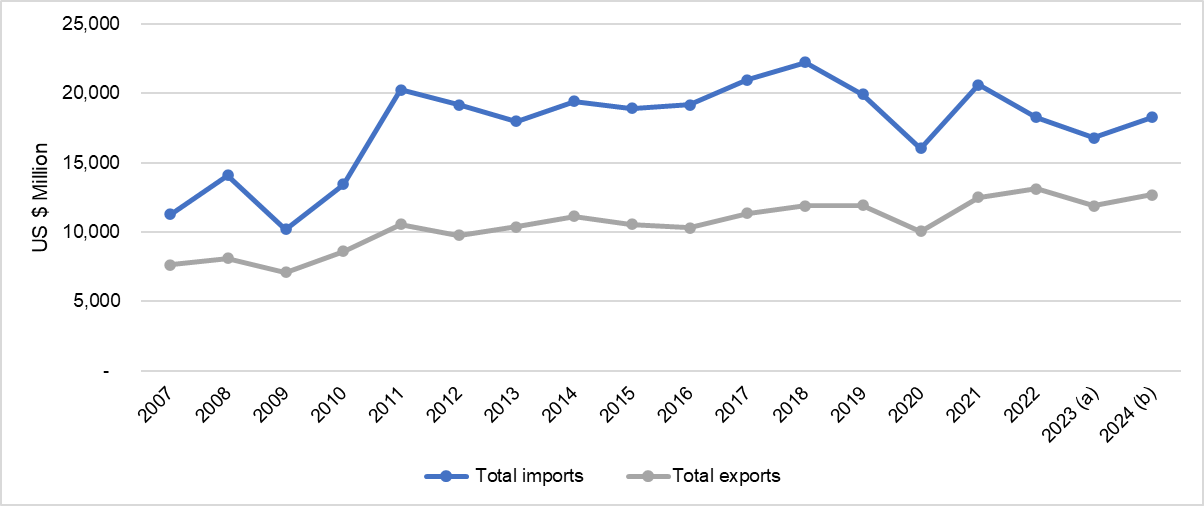
This effect on real incomes, particularly also because wages tend to increase much slower than price levels, means that people are no longer able to consume the quantity of imported goods that they could before. As a result, the demand for imported goods has fallen from a pre-pandemic average of about US $20 billion to approximately US $16 billion in 2023 (Figure 2).
Figure 2: Imports and exports, 2007-2024
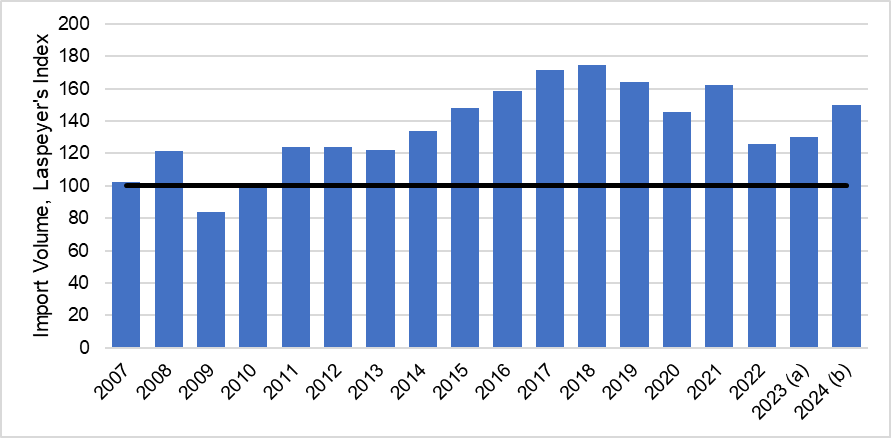
However, import demand in 2024 has begun picking up slowly due to a combination of stable monetary policy and easing global inflation. The rapid depreciation of the Sri Lankan Rupee previously had severely impacted import demand as import prices rose up significantly due to the high exchange rate.
Import volumes are still lower than they were pre-crisis, however the trajectory suggests that import demand, even in terms of volumes, should recover (Figure 3). The demand for certain imports like motor vehicles are also artificially restricted due to prevailing import bans. The government has, however, signaled that it will remove this ban in the near future, which will contribute to increasing import demand.
Figure 3: Import Volume Index (Laspeyre’s Index), 2009-2024
Central Bank’s Dollar Purchases
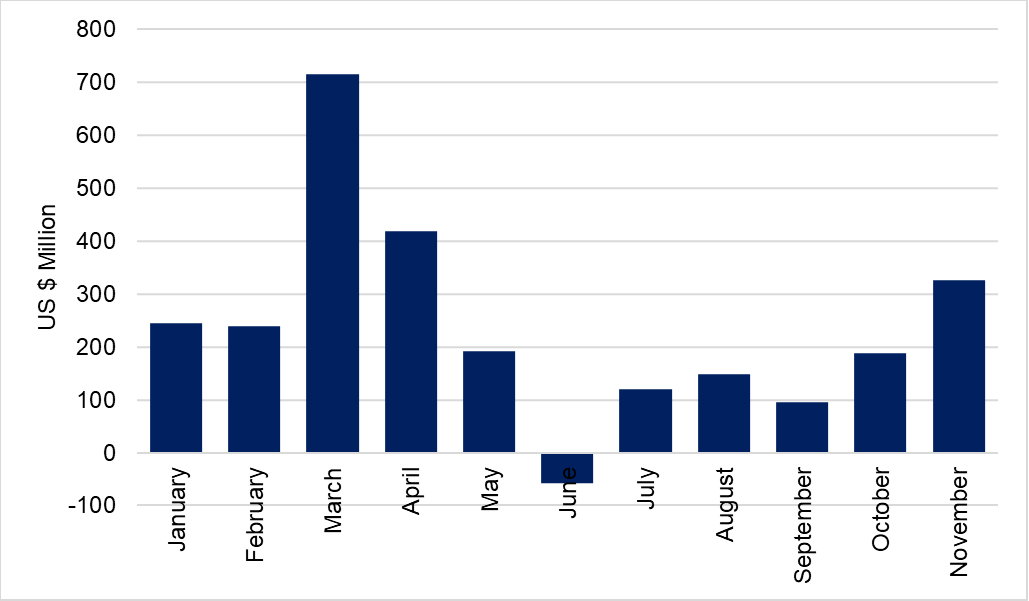
The Central Bank has been purchasing US Dollars on the market to shore up its reserves (Figure 4) which have picked up quite favourably from over the past year to US $6.46 billion in October, which is sufficient to cover about 4.5 months of imports
Figure 4: Central Bank net purchases, 2024
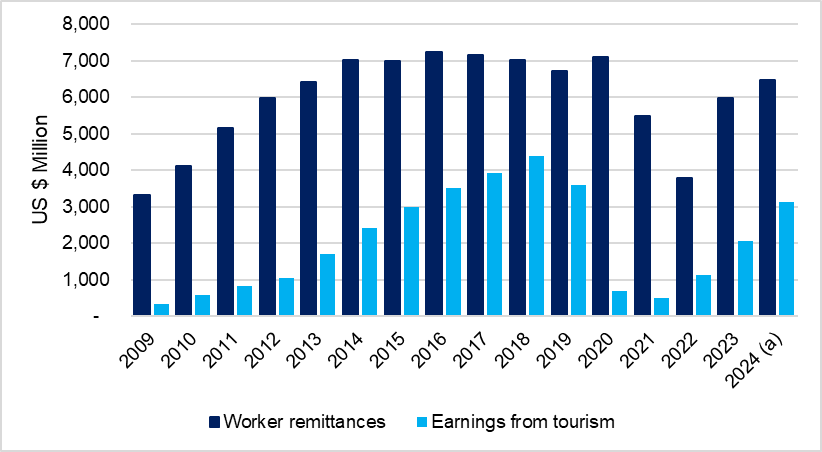
The Central Bank of Sri Lanka has been gradually growing its foreign currency reserves through a combination of forex purchases which have been bolstered by increasing worker remittances and tourism earnings (Figure 5) as well as funding support from institutions like the International Monetary Fund.
Figure 5: Worker remittances and earnings from tourism, 2009-2024
Debt restructuring
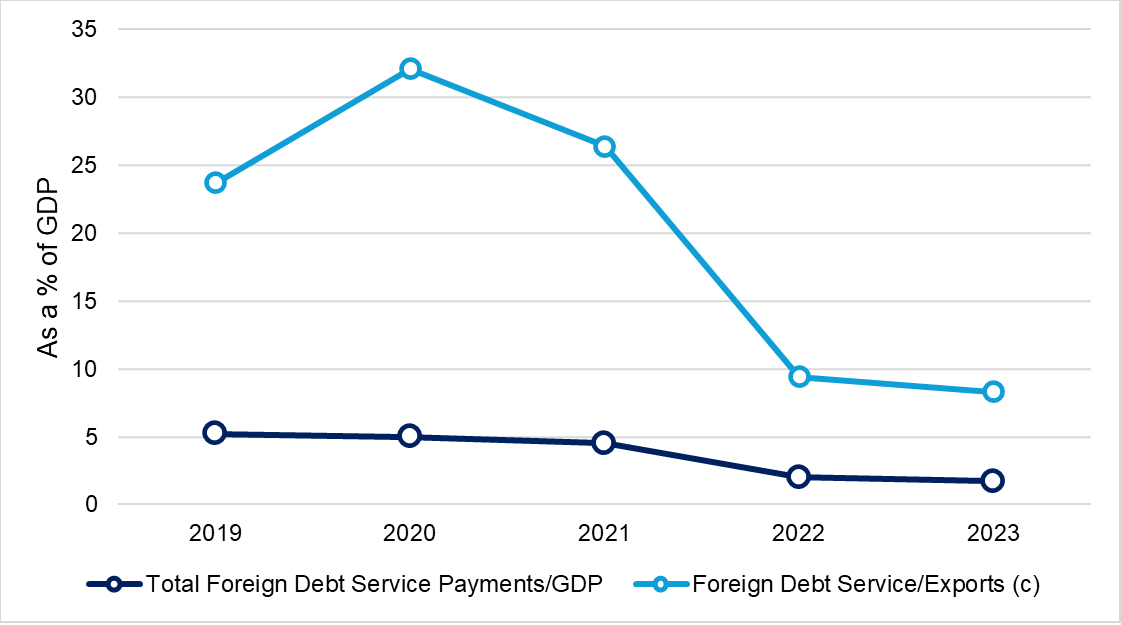
Due also in part to the debt restructuring process, in which Sri Lanka has suspended repayments of bilateral and private external debt, the demand for US $ from the Sri Lankan government to service its external debt obligations are lower than in a non-default setting. As Figure 6 shows foreign debt service payments have reduced from roughly 5% of GDP pre-default to around 2% post-default. You can also observe the reduced strain placed on export earnings – pre-default, about 26% of export revenues were needed to service foreign debt repayments while it was roughly 8.3% in 2023.
Figure 6: Foreign debt service payments as a share of GDP and as a share of exports, 2019-2023
This is a temporary boon as Sri Lanka will begin servicing interest payments and accrued interest payments by the end of the year, which will increase the demand for US $ and put some pressure for upward movement of the exchange rate.


Leave a Reply