
By Yenuli Ranaweera and Rojie Ekanayake
(The views expressed are those of the authors and do not necessarily reflect the views of Arutha)
(Yenuli Ranaweera is a Research Assistant and Rojie Ekanayake is a Programme and Research Officer at Arutha. Arutha is a Colombo-based policy think tank focused on economic research and communication with a special interest in public debt and taxation. Its economic civic education initiative, Default LK, was established during Sri Lanka’s first-ever sovereign default in 2022)
How to support working women
The rates and underlying factors contributing to Sri Lanka’s low Female Labour Force Participation (FLFP) have been widely discussed. Conversations about women in the world of work centre around this issue of participation. At the same time, to truly support women, we must look beyond simply getting them into the workforce.
Our previous two articles in this series addressed the seriousness and persistence of this issue, and how it is linked to the well-being of families and communities through unpaid work. This final piece will explore why creating decent jobs – offering fair pay, upholding rights, and ensuring safety, inclusivity, and equal opportunities – is just as crucial as increasing job availability.
Recruitment roadblocks
The workforce includes those who are employed and unemployed or looking for work. Despite their willingness to work, women in Sri Lanka encounter higher unemployment rates compared to men.
Studies have shown this is partly because employers are discouraged from recruiting women due to what is framed as the ‘additional cost’ it incurs. For example, in many sectors women are entitled to employer-funded maternity leave and pay. Some laws require employers to undertake additional measures such as providing accommodation or transport if women work the night shift.
As mentioned in our previous article ‘Hidden labour: Why unpaid care work matters,’ society’s expectation that women must undertake most of the care work at home also influences discrimination during recruitment. Even employers who guarantee paid family leave can be prejudiced against younger female job seekers and employees, acting on the assumption that they will soon need to take maternity leave.
On the other hand, women who are employed also face difficulties due to a lack of adequate parental leave policies. These force many women to choose between their careers and their families as they do not receive the necessary support to balance these dual roles.
Gendered jobs
The job market is far from equal. There is a disproportionately high representation of women and men in different types of jobs, known as occupational segregation.
According to Sri Lanka’s annual Labour Force Survey 2023, more than half of those working as clerks and clerical support workers were women even though women only account for one-third of the total employed population. Likewise, men account for 88.2% of employers and 74.3% of self-employed workers. The negative outcomes of this segregation include lower earnings and in a wider sense, limiting the potential of women and girls.
Women often find themselves in what are called ‘pink-collar’ jobs, which include roles such as teaching, secretarial work, and administrative support. These are valuable roles but tend to be lower-paying and are less prestigious than jobs dominated by men.
Women are also more likely to be helping in their households or relatives’ businesses. This contribution that enables other family members to work outside the home often goes unrecognised.
Stagnant and hostile workplaces
Employed women encounter numerous difficulties in the workplace. The gender pay gap is a well-known phenomenon, with women on average earning less than their male counterparts for doing the same work.
In Sri Lanka the pay gap is around 24%. The 2023 Labour Force Survey shows that among monthly wage earners, women earn a median salary that is approximately Rs. 5,000 less than that of men. For daily wage earners, the gap is even wider, with a difference of approximately Rs. 13,750.
Against this background, career progression remains a significant challenge for women, even after they secure employment. Phenomena like ‘glass ceilings’ – invisible barriers that prevent women and minorities from ascending the career ladder – and ‘sticky floors’ – conditions that make it difficult for them to progress beyond lower ranks of an organisation – are some of these challenges.
Women often encounter biases from senior management, lack mentorship, and find few role models in higher positions. These are domino effects of years of gendered and hostile workplaces, creating a challenging environment for women seeking to advance their careers. The 2023 Labour Force Survey reveals that only 2.5% of women hold positions as managers, senior officials, and legislators compared to nearly double that for men.
Workplace harassment is also a common occurrence. An International Finance Corporation (IFC) study in Sri Lanka found that three out of five people in the country experience some form of workplace violence or harassment, with one in five feeling unsafe at work.
It is important to understand that harassment may not always be physical or violent on the part of supervisors or colleagues. It includes verbal or mental harassment through sustained pressure and reprimanding, intrusive comments, inappropriate jokes, and such.
Different communities face different obstacles
It is crucial to recognise that women employed in various sectors and geographical areas may encounter distinct challenges. For women who work in plantation agriculture, specifically the Malaiyaha Tamil community, this means having to take care of children before and after long hours of the day spent working on tea estates.
This limits the time they have for social interactions and rest, and often pushes children – particularly girls – to take on care responsibilities typically imposed on women, perpetuating female subordination.
Women’s reproductive rights are frequently violated, with reduced maternity benefits after two children and coerced sterilisations under poor conditions. Low wages also drive women to work night shifts in factories, where they face inadequate protections and frequent sexual harassment.
Migrant women workers, primarily perceived and employed as ‘unskilled labour,’ also face significant challenges. They endure exploitation from recruitment agencies and are subjected to restrictive Government regulations, such as the Family Background Report (FBR) to assess childcare responsibilities after they leave.
Cabinet approval was given to relax the FBR requirement in 2022, as a means of generating more remittance revenue during the crisis. Yet the authors were informed by the Sri Lanka Bureau of Foreign Employment (SLBFE) that the policy is still in practice as of September.
Despite having valuable work experience, returnee migrant workers face obstacles in reintegrating into the local economy due to social stigma and lack of information about opportunities.
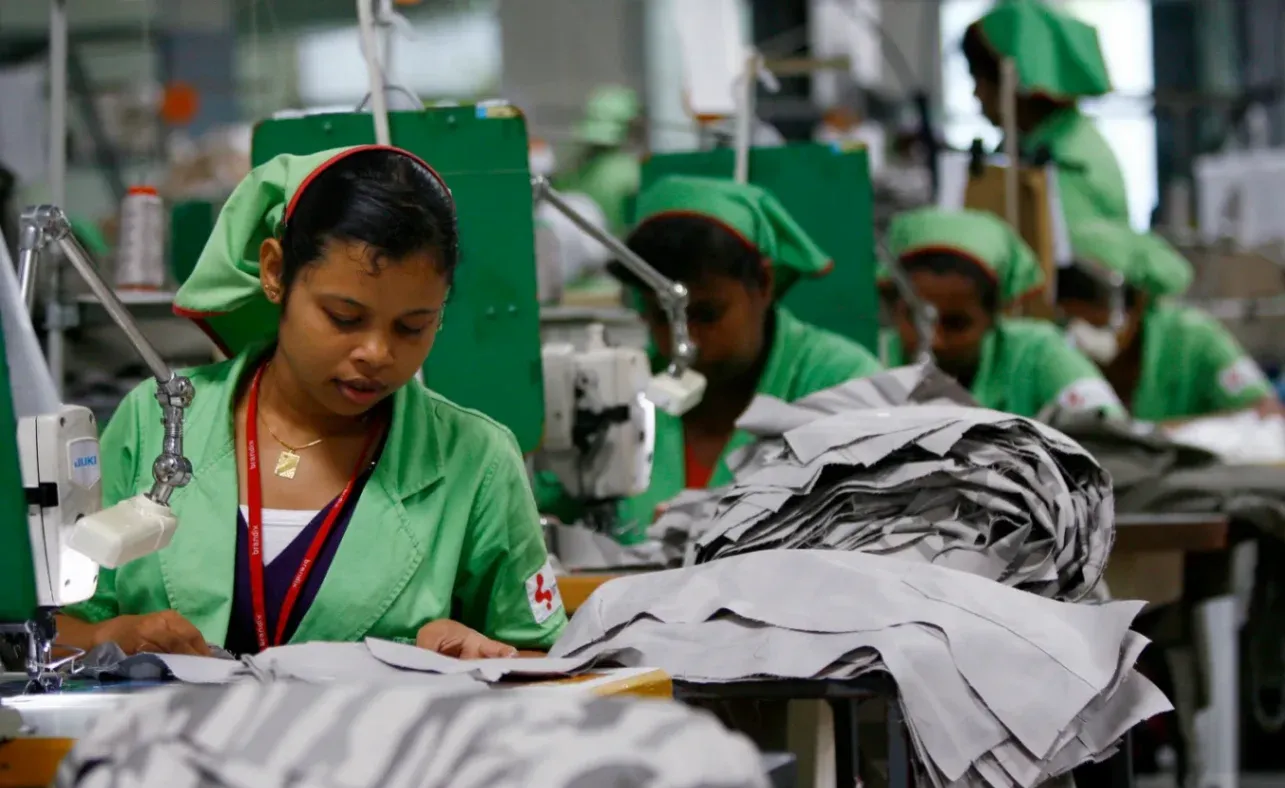
In the apparel industry, where women make up 85% of the workforce, they face significant gender-based violence and exploitation. Health issues like malnutrition, anaemia, and stress are common, driven by low wages and hazardous working conditions.
Workers often need to do excessive overtime to earn a liveable wage, highlighting the discrepancy between the industry’s claims of high labour standards and the reality of poor working conditions. Addressing these unique challenges is essential to improving the lives of women in these critical sectors.
Supporting women in the workforce
Despite the Government’s efforts to increase FLFP through measures such as targets in the Economic Transformation Act, not enough attention is given to retaining women who are already participating in the labour force. Policymakers must give priority to female voices and ensure additional legislation does not place more bureaucratic barriers for women seeking employment.
Shifting the cost of maternity benefits from employers to the State could encourage more employers to hire women, by extension giving more women a chance to enter the workforce. Introducing policies that support parental leave for both parents would encourage shared caregiving responsibilities, reducing the burden on women.
It is also important to standardise maternity leave benefits across all sectors, including women engaged in casual employment, to ensure fair and adequate support, regardless of the number of children or the industry.
To eliminate discrimination in the workplace, national policies ensuring equal pay must be introduced. Salary transparency and transparency in hiring and promotion practices should also be encouraged.
Further, existing labour laws must be enhanced to provide better protection against Sexual and Gender-Based Violence (SGBV), harassment, and discrimination in the workplace. Accessible reporting mechanisms that ensure confidentiality and support for survivors must be established and strict penalties must be implemented for violations.
It is crucial to recognise the unique challenges women face across different sectors and regions. Targeted programmes should address these specific issues, ensuring all women can contribute to and benefit from the economy.
For example, recruitment practices need reform to eliminate exploitative agencies targeting female migrant workers, alongside providing comprehensive pre-departure training on rights and protections.
Especially for women in the plantation agriculture and apparel sectors, the Government must enforce better health and safety standards, ensure fair wages reflective of living costs, and provide access to safe transportation and housing. As discussed in previous articles, this requires collaboration across institutions, including the Government, private sector, judicial system, law enforcement, and urban developers.
Addressing the diverse challenges faced by women in Sri Lanka’s workforce is essential to creating an equitable and supportive environment. By implementing targeted reforms, improving legal protections, and promoting fair labour practices, women can thrive in their careers.
Ensuring that all women, regardless of their sector or location, have access to safe, fair, and rewarding employment is not only a matter of strengthening the nation’s economy but also a vital step towards justice.


Leave a Reply